

MoistTech will showcase its IR-3000 near-infrared moisture sensor at PACK EXPO International 2026, demonstrating how continuous moisture measurement can help snack manufacturers improve product consistency, reduce waste and optimise energy use.
The company will demonstrate the technology at booth LU-7735 during the exhibition, which takes place from 18–21 October in Chicago.
Designed for continuous, non-contact measurement, the IR-3000 is installed directly above the production stream and provides operators with immediate information on moisture levels without interrupting production or requiring samples to be removed for laboratory testing.
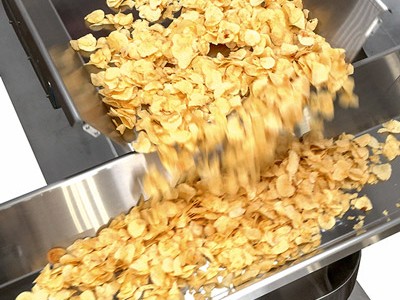
MoistTech identifies snack foods among the applications for the technology, alongside baked goods and grains. For snack manufacturers, moisture can directly influence characteristics including texture, consistency, yield, shelf life and finished product weight.
Real-time monitoring can therefore provide processors with an opportunity to identify changes before they result in larger quantities of off-specification product.
Real-time monitoring targets consistency
Traditional moisture testing frequently relies on samples being taken from the production line and analysed separately. While laboratory measurements remain useful for quality control, MoistTech said the process is inherently reactive because production continues while manufacturers wait for results.
The IR-3000 aims to move moisture measurement directly onto the processing line, allowing operators to respond as conditions change.
The sensor uses near-infrared technology to take instantaneous readings without touching the product, meaning the production process can continue uninterrupted.
For snack manufacturers, greater visibility over moisture levels can be particularly valuable during drying, baking and other thermal processing stages where relatively small variations can affect finished-product characteristics.
Moisture plays an important role in maintaining the desired crunch and texture of products such as crisps, extruded snacks, crackers, nuts and other dry snack formats. Excess moisture can affect crispness and shelf stability, while excessive drying may impact yield, quality and energy consumption.
Facilities manufacturing several different products can store up to 50 individual product calibrations within the IR-3000 system, helping processors move between production runs.
Each sensor can also be pre-calibrated using samples supplied by the manufacturer to simplify installation and commissioning.
Reducing waste and energy consumption
MoistTech said continuous measurement can also help manufacturers identify process variations sooner and make adjustments before significant quantities of product fall outside specification.
Earlier intervention has the potential to reduce scrap and rework while improving consistency between production runs.
Energy efficiency represents another potential advantage, particularly where snack manufacturing involves ovens and dryers.
These systems can represent some of the most energy-intensive stages within food production. Without real-time moisture information, processors may use more heat or drying time than a product actually requires as a precaution against excessive moisture.
Continuous measurement gives operators additional information to optimise these processes and avoid unnecessary over-drying.
The IR-3000 has also been engineered to accommodate variations encountered within industrial environments, including changes in product height and colour, ambient temperature, conveyor conditions and gaps in the product stream.
MoistTech said the sensor is designed to maintain its calibration over time, while its cast aluminium housing helps dissipate heat and support measurement stability in demanding production conditions.
At PACK EXPO, visitors will be able to see the IR-3000 operating live and discuss potential applications with MoistTech’s technical team.
The demonstration will highlight how real-time process data can help snack manufacturers maintain tighter quality control while improving yield, reducing waste and managing energy-intensive production stages more efficiently.