
The global fortified snacks market is on a strong upward trajectory, with new industry research placing its 2024 valuation at USD 8.7 billion and projecting growth to approximately USD 16.2 billion by 2033, expanding at a compound annual growth rate (CAGR) of 7.2% between 2025 and 2033, according to a newly published market research report.
The findings point to a snack category increasingly shaped by consumer demand for convenience without compromising nutrition — a shift that is reshaping product development, retail strategy, and competitive positioning across the food and beverage industry.
Health-Driven Demand Fuels Market Momentum
The report attributes much of the fortified snacks market’s growth to heightened health awareness among consumers worldwide. As more shoppers look beyond basic nutrition toward snacks that actively support wellness, products enriched with vitamins, minerals, proteins, and probiotics are seeing strong uptake. Rising rates of lifestyle-related conditions such as obesity, diabetes, and cardiovascular disease are also pushing consumers toward snack options that contribute meaningfully to their daily nutrient intake.
Urbanization and busier lifestyles are compounding this trend. With less time available for meal preparation, consumers are turning to ready-to-eat, nutrient-dense snacks as a practical alternative — a shift further supported by the expansion of organized retail and modern trade channels that have improved product accessibility worldwide.
Manufacturers, meanwhile, are investing heavily in product innovation, incorporating functional ingredients like plant-based proteins, probiotics, and superfoods, while using digital marketing and wellness-influencer partnerships to build consumer awareness and drive category adoption.
Cereal-Based and Protein-Fortified Snacks Lead Product Innovation
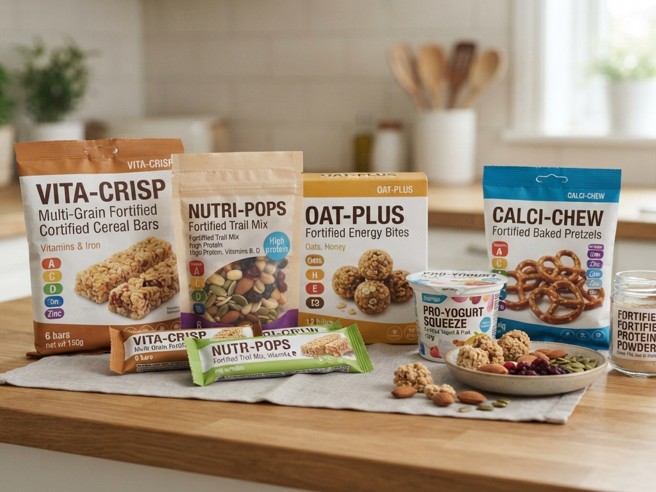
Segmented by product type, cereal-based snacks hold the largest share of the global market, owing to their versatility, wide availability, and ease of fortification with vitamins, minerals, and fiber. Manufacturers in this segment are increasingly introducing gluten-free and whole-grain formulations to meet shifting dietary preferences.
Dairy-based snacks — including fortified yogurts, cheese sticks, and milk-based bars — are also expanding steadily, driven by demand for protein- and calcium-enriched options and growing interest in probiotic and gut-health benefits. Fruit & nut snacks are gaining traction among consumers favoring natural, minimally processed foods, while meat-based fortified snacks are carving out a niche among protein-focused consumers, including athletes and fitness enthusiasts.
By nutrient type, vitamin-fortified snacks remain the most widely adopted, followed by mineral-, protein-, and probiotic-fortified products — the latter representing one of the fastest-evolving segments as gut-health awareness continues to rise globally.
Retail Landscape: Supermarkets Lead, Online Retail Accelerates
Supermarkets and hypermarkets continue to account for the largest share of fortified snack sales globally, supported by broad product assortments and established supply chains. However, online retail is emerging as the fastest-growing distribution channel, propelled by the ongoing shift to e-commerce, the rise of direct-to-consumer nutrition brands, and shopping habits that solidified during the COVID-19 pandemic and have persisted since. Convenience stores and specialty health-food retailers also play significant roles, particularly for impulse purchases and premium, clean-label offerings.