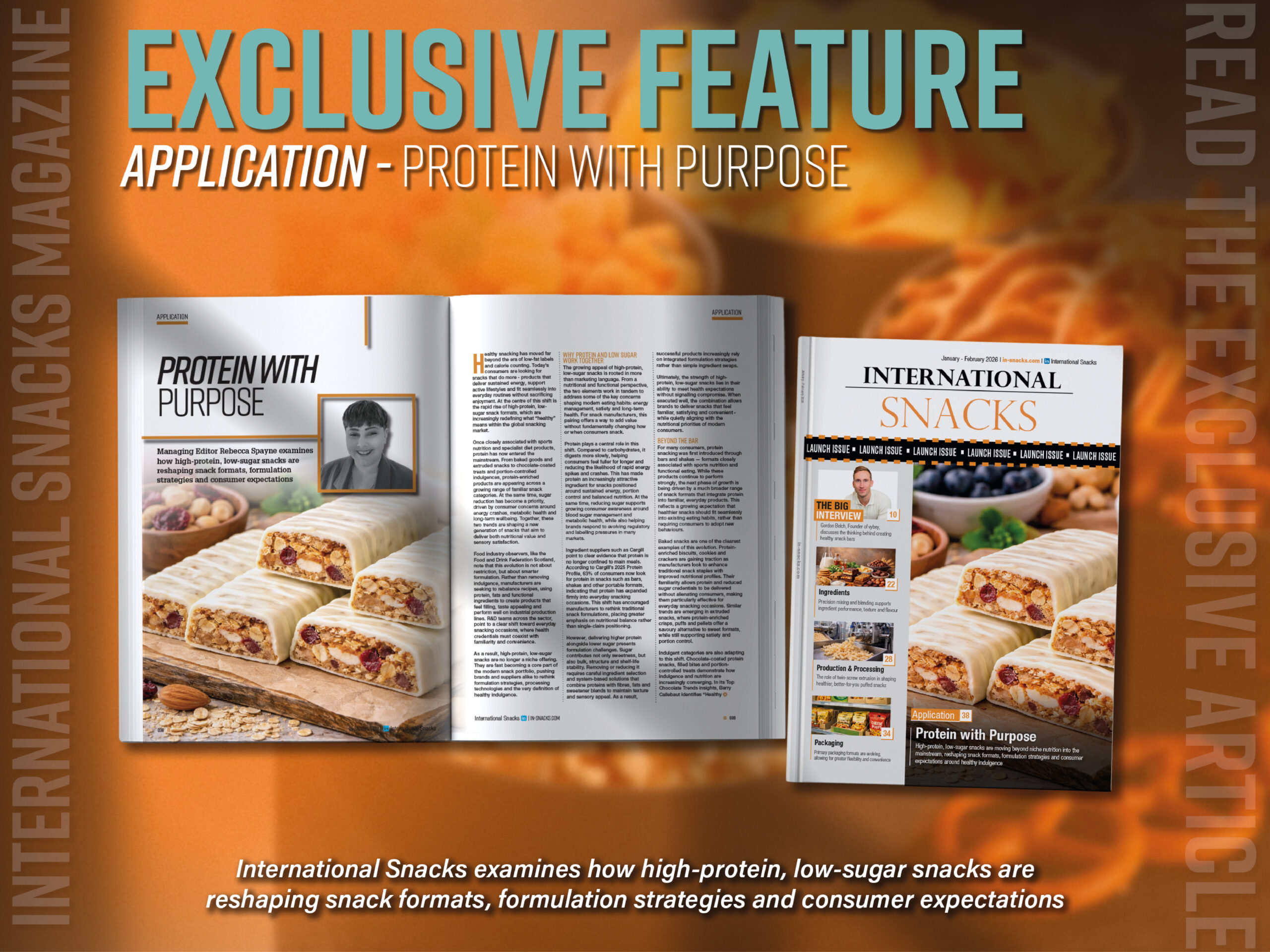

Managing Editor Rebecca Spayne examines how high-protein, low-sugar snacks are reshaping snack formats, formulation strategies and consumer expectations
Healthy snacking has moved far beyond the era of low-fat labels and calorie counting. Today’s consumers are looking for snacks that do more – products that deliver sustained energy, support active lifestyles and fit seamlessly into everyday routines without sacrificing enjoyment. At the centre of this shift is the rapid rise of high-protein, low-sugar snack formats, which are increasingly redefining what “healthy” means within the global snacking market.
Once closely associated with sports nutrition and specialist diet products, protein has now entered the mainstream. From baked goods and extruded snacks to chocolate-coated treats and portion-controlled indulgences, protein-enriched products are appearing across a growing range of familiar snack categories. At the same time, sugar reduction has become a priority, driven by consumer concerns around energy crashes, metabolic health and long-term wellbeing. Together, these two trends are shaping a new generation of snacks that aim to deliver both nutritional value and sensory satisfaction.
Food industry observers, like the Food and Drink Federation Scotland, note that this evolution is not about restriction, but about smarter formulation. Rather than removing indulgence, manufacturers are seeking to rebalance recipes, using protein, fats and functional ingredients to create products that feel filling, taste appealing and perform well on industrial production lines. R&D teams across the sector, point to a clear shift toward everyday snacking occasions, where health credentials must coexist with familiarity and convenience.
As a result, high-protein, low-sugar snacks are no longer a niche offering. They are fast becoming a core part of the modern snack portfolio, pushing brands and suppliers alike to rethink formulation strategies, processing technologies and the very definition of healthy indulgence.
Why Protein and Low Sugar Work Together
The growing appeal of high-protein, low-sugar snacks is rooted in more than marketing language. From a nutritional and functional perspective, the two elements work in tandem to address some of the key concerns shaping modern eating habits: energy management, satiety and long-term health. For snack manufacturers, this pairing offers a way to add value without fundamentally changing how or when consumers snack.
Protein plays a central role in this shift. Compared to carbohydrates, it digests more slowly, helping consumers feel fuller for longer and reducing the likelihood of rapid energy spikes and crashes. This has made protein an increasingly attractive ingredient for snacks positioned around sustained energy, portion control and balanced nutrition. At the same time, reducing sugar supports growing consumer awareness around blood sugar management and metabolic health, while also helping brands respond to evolving regulatory and labelling pressures in many markets.
Ingredient suppliers such as Cargill point to clear evidence that protein is no longer confined to main meals. According to Cargill’s 2025 Protein Profile, 63% of consumers now look for protein in snacks such as bars, shakes and other portable formats, indicating that protein has expanded firmly into everyday snacking occasions. This shift has encouraged manufacturers to rethink traditional snack formulations, placing greater emphasis on nutritional balance rather than single-claim positioning.
However, delivering higher protein alongside lower sugar presents formulation challenges. Sugar contributes not only sweetness, but also bulk, structure and shelf-life stability. Removing or reducing it requires careful ingredient selection and system-based solutions that combine proteins with fibres, fats and sweetener blends to maintain texture and sensory appeal. As a result, successful products increasingly rely on integrated formulation strategies rather than simple ingredient swaps.
Ultimately, the strength of high-protein, low-sugar snacks lies in their ability to meet health expectations without signalling compromise. When executed well, the combination allows brands to deliver snacks that feel familiar, satisfying and convenient – while quietly aligning with the nutritional priorities of modern consumers.
Read the full article in our latest issue here