
Rockwell Automation has identified disconnected data and workforce readiness as barriers preventing food and beverage manufacturers from expanding artificial intelligence (AI) beyond individual pilot projects.
In analysis released on 28 October 2026, the industrial automation company reported that nearly 90% of food and beverage manufacturers are using AI and machine learning or intend to do so soon. However, respondents said they effectively use only around 45% of the data they collect.
Drawing on its 2026 State of Smart Manufacturing Report, Rockwell argues that AI investment must be linked to operational objectives rather than treated as a series of isolated technology trials.
Connecting factory and business data
The company says better integration between information technology (IT) and operational technology (OT) systems could improve data access and allow successful applications to be replicated across production facilities.
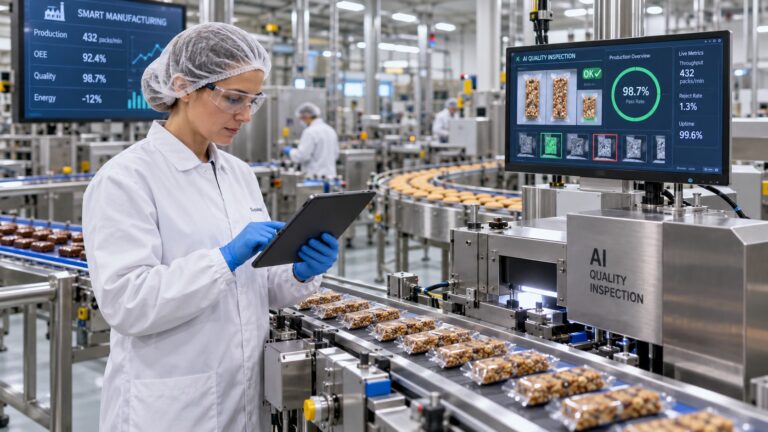
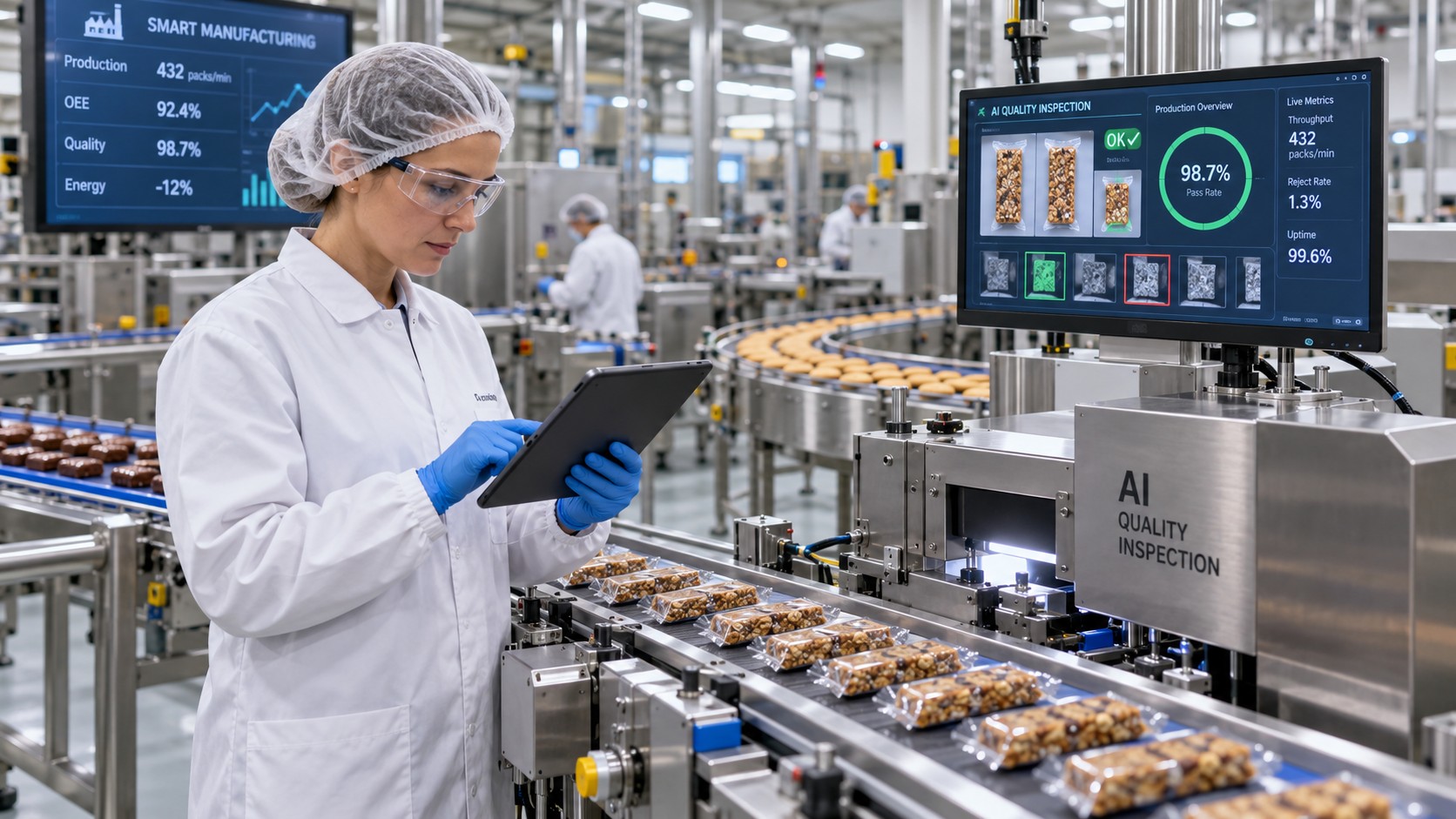
One example is machine-vision inspection. Although systems may detect defects on individual lines, linking inspection data with wider IT platforms can help manufacturers compare performance between sites, identify recurring problems and apply improvements more consistently.
Industry respondents expect the proportion of manufacturing processes supported by AI to rise from approximately 37% currently to more than 60% by 2030. Rockwell identifies product quality, productivity, cost control and operational risk as areas where manufacturers should seek measurable results.
Workforce skills remain essential
The findings also highlight the organisational changes involved in wider deployment. Across the manufacturers surveyed, 93% expect smart manufacturing to reshape their workforce, while 40% reported reskilling employees over the preceding year.
Greg Schmidt, Rockwell Automation’s vice president for CPG Global Industry, said manufacturers are increasingly concerned with scaling successful trials, which requires connected data and integrated operations as well as technology.
For plant operators and investment teams, the analysis reinforces the importance of assessing data quality, system interoperability and staff capabilities before extending an AI project across multiple sites.
Rockwell’s accompanying guidance recommends establishing repeatable processes and measuring outcomes from the outset, helping organisations judge whether an initial deployment can deliver value beyond a single production line.