Busy lifestyles are reshaping snack innovation, driving advances in packaging, portion control and product design. Managing Editor Rebecca Morpeth Spayne explores…
Research into the on-the-go packaging market highlights how urbanisation is reshaping expectations around convenience. Lightweight, easy-open and resealable packaging formats are gaining traction across the snacks sector, enabling consumers to eat flexibly while travelling, working or socialising. For snack manufacturers, this shift is not simply about portion size, but about designing formats that support freshness, portability and repeated consumption throughout the day. As a result, on-the-go functionality has become a key differentiator in an increasingly competitive snack market.
Designed for Life in Motion
Urban living is fundamentally reshaping how, when and where snacks are consumed. As cities become denser and daily routines more fragmented, snacks are increasingly expected to function across multiple moments rather than fit into a single, clearly defined eating occasion. Commuting, hybrid working patterns, social mobility and longer days away from home have turned snacks into practical food solutions that must travel well, fit easily into bags or pockets and be consumed quickly, often in less-than-ideal settings.
For global snack producers, this shift has prompted a reassessment of what on-the-go really means. Rather than focusing solely on portability, manufacturers are designing snack formats that accommodate repeated, flexible consumption throughout the day. Companies such as Nestlé, PepsiCo and Mondelez International have steadily expanded ranges of compact, portioned and multi-occasion snacks, reflecting the reality that urban consumers may snack several times between meals rather than sit down for structured eating moments.
This evolution is particularly visible in large metropolitan markets, where convenience is no longer a differentiator but a baseline expectation. Snacks must be easy to open, easy to carry and easy to store between uses, while still delivering consistent taste and texture. For producers operating at scale, this has meant rethinking format architecture, from the size and shape of individual products to how packs function once opened and resealed.
At the same time, urban consumers are becoming more deliberate about how snacks fit into their daily routines. Rather than being driven by impulse alone, snacks are increasingly chosen with intent – as desk snacks, commuting companions or items that can be consumed in short bursts between activities. Global players such as Kellogg’s and General Mills have responded by positioning many of their snack products as adaptable solutions that can move between breakfast, snacking and light meal occasions, blurring traditional category boundaries.
Packaging That Performs
Research into the on-the-go packaging market highlights growing demand for formats that support convenience without compromising freshness. Resealable features, in particular, have moved from being a premium addition to a near-standard requirement across many snack categories. For manufacturers, this reflects a clear shift in behaviour: consumers want the freedom to open a pack, eat part of the product, and store the rest safely until later in the day without loss of quality.
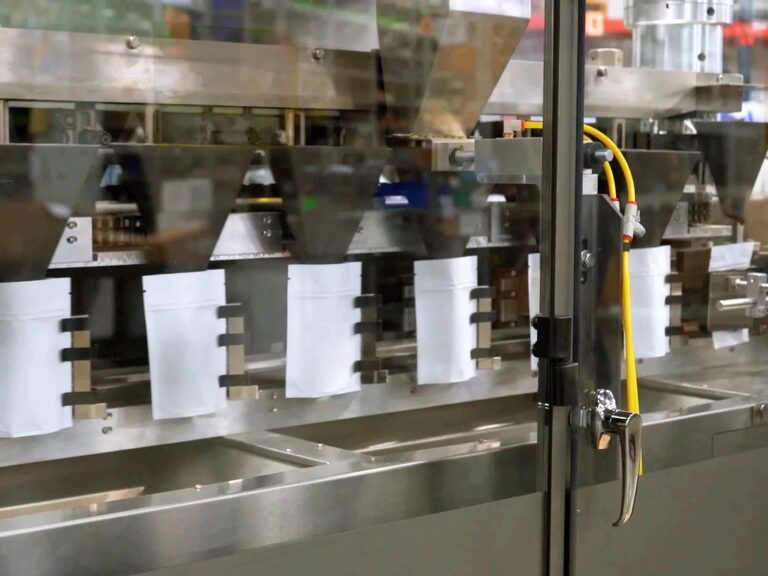
Global snack producers such as Mondelez International, Mars and PepsiCo have progressively expanded the use of resealable packaging across biscuits, confectionery and savoury snacks, recognising its role in supporting flexible consumption. Stand-up pouches, zipper closures and easy-open seals enable snacks to function across commuting, work and leisure occasions, while also addressing concerns around portion control and waste. In urban markets, where shoppers often purchase smaller quantities more frequently, this added functionality has become particularly relevant.
Packaging performance also plays a crucial role in maintaining product quality throughout the day. On-the-go snacks may be opened and closed multiple times, exposed to fluctuating temperatures or carried in bags alongside other items. As a result, packaging must provide effective barriers against moisture, air and contamination, ensuring that taste, texture and appearance remain consistent. This is especially important for products such as biscuits, coated snacks and confectionery, where even minor quality degradation can undermine consumer trust.
Read the full article in our latest issue here