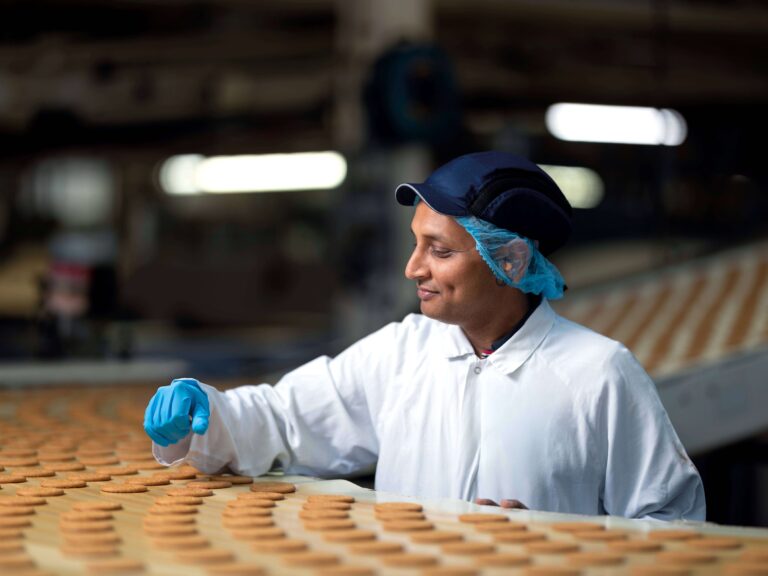
pladis, the global snacking company behind some of the UK’s most loved brands, is highlighting its support for British farmers and its commitment to British wheat with a new design across the best-loved McVitie’s Digestives Original range.
Rolling across grocery, wholesale and convenience channels from the end of July, the pack declares the use of ‘100% British Wheat’ and ‘Partnering with Farmers’. The image addresses the growing importance of provenance to British consumers, where they want to better understand where and how their food is produced.
Supporting British Farmers
It underlines pladis’ commitment to supporting British farming through its Back to Farm programme, which involves just over 50 farmers, providing financial and practical support to help them introduce regenerative farming methods. Through the programme, over 4,000 hectares are already farmed using regenerative practices, producing over 30,000 tonnes of grain – roughly equivalent to the annual wheat requirement for McVitie’s Original Digestives.
“We are proud to showcase our commitment to British farmers – and therefore our Back to Farm programme – on-pack by letting progressively knowledgeable and engaged consumers know that we use only British-grown wheat in all our McVitie’s Original Digestives,” says Jennifer Parise, Director Procurement, pladis UK&I. “We also help to support British farmers through Back to Farm in which wheat is grown using regenerative practices aimed at improving soil health and biodiversity.
“Back to Farm is delivered in partnership with Frontier Agriculture*. It provides financial incentives to cultivate wheat varieties that meet pladis’ quality and performance standards using regenerative methods. The scheme operates a flexible, tiered recognition system that’s designed to acknowledge existing sustainable practices and encourage further progress at farm level.
“Our goal is to have over 50% of all wheat used in our UK-baked products grown through our Back to Farm programme by the end of 2030, and having more growers and more land farmed as part of our programme is critical to this.”