
As consumer lifestyles grow increasingly busy and diverse, frozen snacks have become a mainstay in global households and foodservice outlets. From handheld samosas and mini pizzas to protein-packed quesadillas and veggie dumplings, the frozen snack category is seeing steady innovation. Yet behind the convenience and indulgence lies a highly engineered process—one that relies not just on freezing technology, but also on the intricate coordination of cutting and portioning systems and the integral role of refrigeration throughout the entire production lifecycle.
The Rise of Frozen Snacks: More Than Just a Convenience
Frozen snacks are no longer perceived as simple party fare or after-school treats. The category has expanded to include global cuisines, health-forward options, and clean-label formats. Demand is being driven by a trifecta of factors: the desire for long shelf life, minimal prep time, and consistent quality.
Manufacturers are now tasked with delivering snacks that mimic freshness, flavour, and texture—even after months in cold storage. But achieving this depends on more than just freezing at the right temperature—it requires a holistic approach to portion control, cooling integrity, and cold chain maintenance from end to end.
Cutting and Portioning: The Engine Behind Consistency
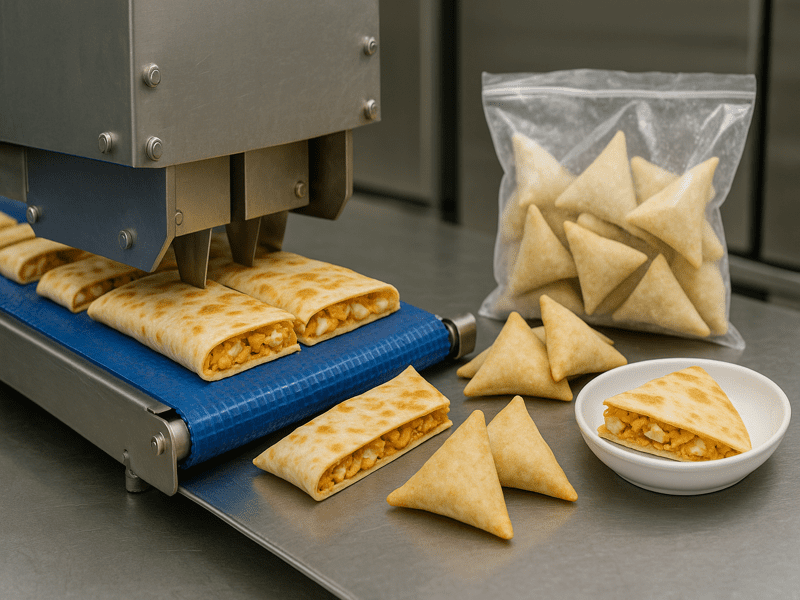
Before a snack hits the blast freezer, it must first pass through one of the most critical stages of its formation: cutting and portioning. Whether it’s dividing a dough sheet into uniform pockets for mini calzones, slicing marinated meats for frozen skewers, or segmenting vegetable-based fillings for burritos, accuracy is essential.
Modern snack lines employ advanced portioning systems equipped with servo-driven blades, ultrasonic cutters, and volumetric dosing tools. These not only ensure uniformity in shape and size but also minimise product waste and optimise line speed. For instance, high-speed guillotine-style cutters can manage sticky or dense products without compromising edge definition—a key attribute for frozen snack products meant to be visually appealing even after reheat.
Precision in portioning also supports nutritional compliance and consistent cooking performance, especially as frozen snacks expand into the better-for-you and single-serve segments. Without this accuracy, consumers risk either under- or over-cooked portions, leading to dissatisfaction and product complaints.
The Role of Refrigeration Beyond Freezing
While flash freezing is often viewed as the star of the frozen food production process, the supporting role of refrigeration systems should not be overlooked. In fact, from raw ingredient staging to post-cutting holding to pre-freeze stabilization, refrigeration maintains the delicate balance needed to ensure food safety, structural integrity, and sensory appeal.
Cold zones are strategically placed throughout modern snack processing facilities. For example, dough used in pastry-style snacks must be kept at specific chilled temperatures after lamination and before cutting, in order to maintain flakiness and prevent smearing. Similarly, fillings like cheese, meat, or vegetable purées are often held in jacketed, temperature-controlled hoppers to avoid microbial risk while preserving consistency.
Moreover, integrated chilling tunnels may be used prior to freezing to gently cool products—preventing steam buildup or structural collapse inside the freezer. This staged temperature reduction helps snacks retain their form and texture, which becomes especially important in high-moisture or high-fat applications.
Bridging Frozen and Refrigerated: A Dual-Sector Perspective
Interestingly, the rise of frozen snacks has begun to blur lines with the refrigerated snack sector. Many snack items now have both chilled and frozen counterparts, such as samosas, egg bites, or Mediterranean-style mezze portions. This dual-market approach allows manufacturers to reach multiple consumer preferences—some looking for ultra-convenience, others prioritising fresh-from-the-fridge feel.
As a result, processing equipment must be flexible. Cutting and portioning systems must handle both chilled and frozen variants, often on the same line or with minimal changeovers. Likewise, ingredient cooling systems must provide tight thermal tolerance to serve both short-term refrigerated products and longer-term frozen lines.
Packaging also plays a part in this crossover. Resealable packs, microwaveable trays, and vacuum-sealed pouches must accommodate both freezing and refrigeration, adding another layer of complexity to production but also offering greater market adaptability.
Challenges and Opportunities Ahead
Despite the technology available, producing high-quality frozen snacks remains a balancing act. Thermal shock during freezing, moisture migration during storage, and texture degradation during reheat are all challenges that manufacturers must overcome.
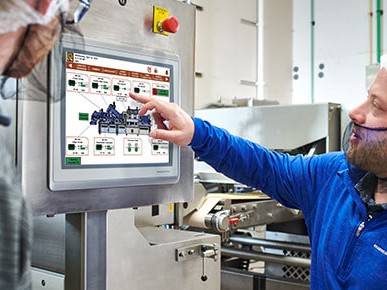
Yet innovation continues. AI-assisted portioning systems, data-driven cold chain monitoring, and the use of cryogenic freezing agents are helping push the boundaries of what’s possible. With snack consumers seeking global flavours, smaller portions, and nutritional alignment, the frozen sector is poised to expand—so long as manufacturers remain vigilant about precision and temperature control throughout every phase.
Conclusion
Frozen snacks may seem simple on the surface, but their production is anything but. It’s a discipline that blends culinary craft with mechanical precision and thermal science. As demand for both frozen and refrigerated snacks continues to grow, especially in multicultural and health-conscious segments, the industries behind them must remain agile—leveraging cutting-edge portioning and refrigeration systems to ensure that every bite, no matter how small, delivers consistent excellence.