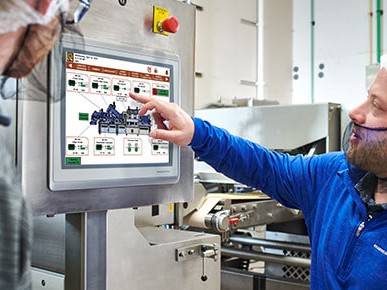


Minimising food contamination risks starts with the way production equipment is designed, built and maintained. When equipment and factory layouts follow hygienic design principles, they support regulatory compliance and help maintain cleaner production conditions. Fortress Technology explores how these design choices align with the “sanitation first” priorities identified by processors in the PMMI 2025 Food Safety and Sanitation Trends report.
Food inspection equipment supports product safety by identifying contamination and production errors, but their performance depends heavily on hygienic design. The PMMI Food Safety and Sanitation Trends report, published in November 2025, shows that ease of cleaning is now the main factor users consider when assessing new food processing and inspection equipment. The report also notes a growing focus on automated functions that reduce manual intervention during sanitation.[i]
Keeping pace with sanitation trends
With the industry’s growing focus on preventive food safety, maintaining hygiene standards and product integrity depends on how equipment is designed, built and maintained. When production equipment incorporates thoughtful design and the right technology, it supports regulatory compliance while making cleaning easier and production conditions safer.
This has increased demand for features such as clean-in-place systems and corrosion-resistant stainless steel surfaces that simplify sanitation and reduce contamination risks.
At the same time the regulatory landscape is evolving. Since 1995, all machinery placed on the UK market must meet the Supply of Machinery (Safety) regulations (SMR08 and its preceding regulations), which includes safety by design. Specifically, these UK regulations require that machinery used in any aspect of food production, packing and inspection are designed and constructed in such a way to avoid any risk of infection, sickness or contagion.
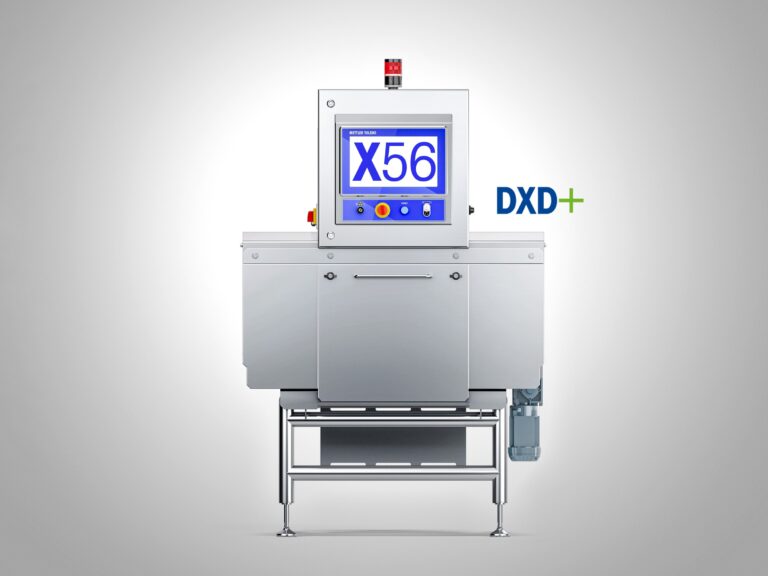
“These hygienic design principles extend to critical inspection equipment such as metal detectors, checkweighers, X-ray and combination systems, all of which must be built to withstand harsh washdown conditions and prevent residue or debris accumulation. In an industry where a single recall can redefine a brand’s future, excellence in hygiene is foundational to business resilience,” states Fortress Technology’s European Sales Director Phil Brown.
Cleaning strategies to address labour shortages
According to the 2025 PMMI report, nearly three quarters (73%) of end users surveyed rely solely on internal teams to execute their sanitation processes. Using a combination of Clean in Place (CIP) and Clean Out -of -Place (COP) techniques is most common, with only 13% of survey respondents saying they use just one of these sanitation methods. Three quarters of those surveyed (75%) also use a combination of wet and dry sanitation processes.
Labour shortages and employee turnover is repeatably cited in the PMMI report as the number one operational challenge by food processors. Constant changes in personnel, including frequent onboarding of new team members, can make it especially challenging to ensure all staff are consistently meeting Sanitation Standard Operating Procedures (SSOP).
For this reason, Fortress Technology intentionally concentrates its efforts on developing smarter designs to support processors to enhance hygiene and safety measures. This includes meeting the core four design principles of cleanability and accessibility, material selection, avoidance of crevices and functionality.
Self-draining surfaces and angled frames on Fortress Technology’s stainless steel metal detector and X-ray systems, for example, eliminate pooling, promote water runoff and faster drying. Hollow areas are sealed, and continuous welds, smooth finishes and rounded edges prevent contaminant harbourage points.
[i] https://www.pmmi.org/report/2025-food-safety-and-sanitation-trends-end-user-oem-and-supplier-perspectives