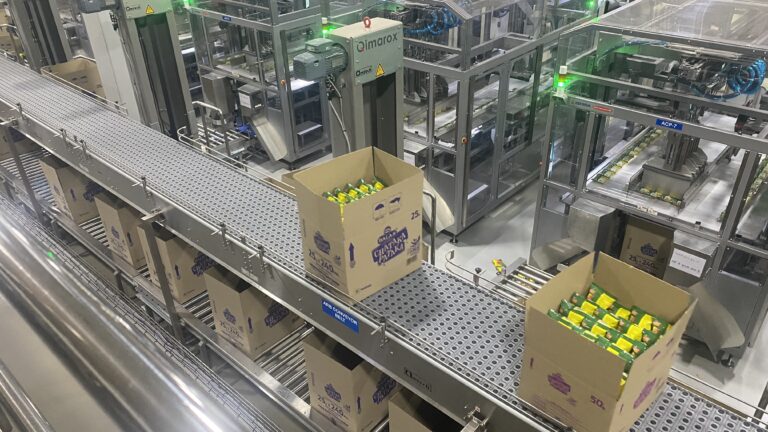


ACI Group warns that supplier diversification alone cannot guarantee supply chain resilience, highlighting the importance of ingredient sourcing and reformulation.
Food manufacturers may be overestimating the resilience of their ingredient supply chains if they judge it by the number of approved suppliers, according to ingredient specialist ACI Group.
ACI joins industry experts like the Cold Chain Federation in highlighting the potential impacts of extreme weather, geopolitical uncertainty and, increasingly, cyberattacks targeting essential infrastructure. The company warns that manufacturers’ focus on running the leanest possible supply chain can leave them exposed to market volatility if they do not also look to build resilience across their businesses.
Balancing efficiency and resilience
Karsten Smet, CEO at ACI, said: “Efficiency and resilience are different disciplines, but manufacturers cannot afford to pursue one at the expense of the other.
“The world is changing quickly, and the supply chain has to adapt. Just having multiple suppliers and alternative transport routes is no longer enough – manufacturers can have several approved suppliers but remain exposed to the same geographical, agricultural, or upstream production risks. Diversification is an element of resilience, but it doesn’t make supply chains resilient on its own.”
The National Audit Office identified extreme weather and cyberattacks among the risks to UK food supplies in a report published on 4 September 2026.
Reformulation to support flexibility
Smet highlighted how reformulation could help manufacturers respond to ingredient supply disruption.
“The disruption to sunflower oil supplies following Russia’s invasion of Ukraine provides a tangible example of how external events can force manufacturers to reconsider established ingredients and formulations.”
Reformulation can give manufacturers more sourcing options before a disruption hits. ACI Group helps manufacturers source alternative ingredients and assess their effect on flavour, shelf life, and production performance, from bench trials through to scale-up.
“The new era of global supply chains is as much about knowledge, relationships, and flexibility as it is about technology and efficiency,” added Karsten. “Businesses need to be able to collaborate with suppliers and experts to improve visibility across the whole chain. That doesn’t mean abandoning efficient supply chains and buying up excess inventory you don’t need, but rather making sure you remain adaptable. Manufacturers can and should have both.”