
Optimising packaging for snack manufacturers

Ana Munoz, Business Development Analyst at Intralox, explores how intelligent conveying, integrated automation and layout optimisation can improve packaging efficiency and support future growth…

In Brief

As snack manufacturers manage increasing product variety and packaging complexity, intelligent conveying and integrated automation can help protect throughput and operational flexibility. Ana Munoz, Business Development Analyst at Intralox, discusses the benefits of Activated Roller Belt technology, layout optimisation and simulation. Drawing on projects with Herr Foods and Balaji Wafers, she explains how manufacturers can reduce downtime, improve efficiency and accommodate future growth within existing footprints.
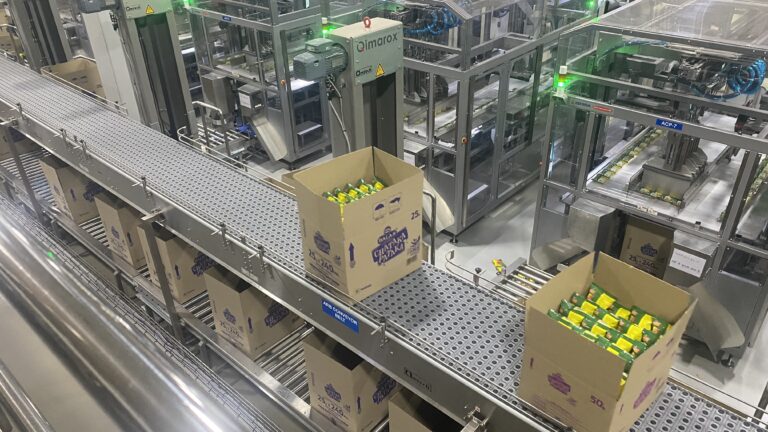
Balaji Wafers case study image

Share this article:

As snack manufacturers introduce more pack sizes, multipacks and product varieties, what challenges arise in primary and secondary packaging operations?

Snack lines used to run a handful of bag sizes. Today, more flavours, multipacks and case formats mean the packaging area has to handle a far wider range of products.

In primary packaging, light bags can slide, tumble or skew as they move through transfers and changes in elevation, and spacing and orientation matter more as speeds rise. In secondary packaging, every new product can mean a new case size, pack pattern or destination. When several packaging lines feed shared case packers and palletisers, merging, switching and sorting cases reliably becomes the real test.

The key is to design for the product range you expect to run, not just what runs today. Activated Roller Belt™ (ARB™) technology suits this well because it can accommodate changes in case sizes, types and throughput rates, and involving us early lets us look at the layout with that future mix in mind.

How can Intralox’s Activated Roller Belt technology improve product flow, reduce jams and maintain throughput?

Merges, switches and transfers are where lines tend to choke. Products are changing lane or direction while the packaging equipment upstream keeps producing, and traditional guides, pushers or stop-and-go movement can lead to collisions, skewed products, gaps and jams, especially as speeds climb.

Activated Roller Belt™ (ARB™) technology takes a different approach. Angled rollers built into the belt surface guide products into position, so they can be merged, aligned, turned, transferred or sorted while they keep moving. There are no pushers to bump or tip products and no need to stop the flow.

That keeps spacing and orientation consistent through the busiest part of the line, with fewer moving parts to maintain. Combined with the right accumulation and controls, it means steadier flow, fewer interruptions and more room to adapt when case sizes or rates change.

How should snack manufacturers choose between dedicated end-of-line and integrated palletising systems, considering production flexibility, available floor space and investment costs?

There isn’t one right answer. It depends on your product mix, rates, available space, how much backup you need and how quickly you expect to grow.

Dedicated end-of-line systems work well for stable, high-volume lines, and a problem on one line stays on that line. The trade-off is that as lines and SKUs multiply, so do the conveyors, palletisers, floor space and labour. Integrated systems combine the output of several lines and route cases to shared palletising. That can make better use of space and equipment, but it puts more weight on accumulation and controls. M. Dias Branco, for example, brought 16 pasta and biscuit lines into one centralised palletising area.


About International Snacks Magazine

International Snacks is the premier global voice of the snack industry, providing expert coverage, in-depth features, exclusive interviews, and valuable insights across print, digital, and event platforms. Published 6 times a year, the magazine is a trusted source for professionals looking to stay informed on the latest innovations, trends, and business developments in the snack sector.

To contribute an article or explore sponsorship opportunities, please get in touch with our team below.

Joseph Clarke Picture

Joseph Clarke

Senior Editor

Steve Blakebrough Picture

Steve Blakebrough

Sales Manager

Afua Akoto Picture

Afua Akoto

Marketing Manager

Before committing capital, it is worth testing both. Our layout optimisation team can lay out each option in your actual space, and simulation can show how each one handles your product mix, rates and accumulation, so you can compare them on evidence rather than assumptions. That is far less costly than finding out after installation.

Whichever way you lean, weigh total cost of ownership and future flexibility alongside the equipment price.

Intralox’s work with Herr Foods increased carton throughput by 25% while doubling the number of SKUs handled. What lessons can snack manufacturers learn about modernising existing packaging operations?

The biggest lesson is that modernising doesn’t have to mean starting over, but it also shouldn’t be a like-for-like swap. Herr Foods’ end-of-line and palletising system had been running for more than 25 years on shoe sorters and two palletisers. Repairs and replacements halted production for more than a week every year, at a cost of about $100,000, while demand kept growing and the footprint stayed the same.

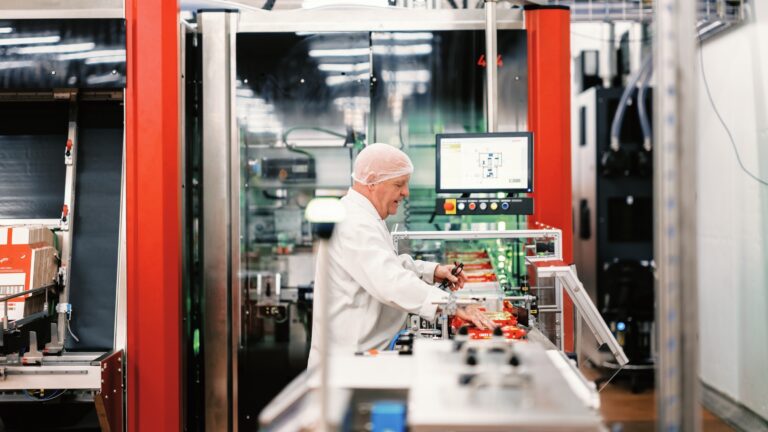
Working with systems integrator Conveyor & Automation Technologies, Intralox supplied ARB™ switching and sorting technology for a new design that fitted the available floor space constraints. Throughput rose 25%, from 120 to 150 cartons per minute. The system grew from 12 to 20 lines, and the number of SKUs doubled from 300 to 600. Built-in redundancy means production never drops below 50% capacity, even during a disruption, and there has been no unscheduled downtime. Herr also saw 15 to 30% fewer labour hours and more than $650,000 a year in pallet-related savings.

The project was split into two phases so production wasn’t affected, a good reminder that how you install is as important as what you install. It also took teamwork: Herr, the integrator and Intralox brought together specialists in sorting, switching and palletising.

Treat modernisation as a chance to fix today’s reliability problems and build in room for growth.

At Balaji Wafers, Intralox’s conveying and sorting technologies were integrated with automated case packers and collaborative palletising robots. How can integrated automation improve efficiency, reduce manual handling and support growth?

Automation delivers the most when the machines work together as one system, and the space between them is often where the challenge lies.

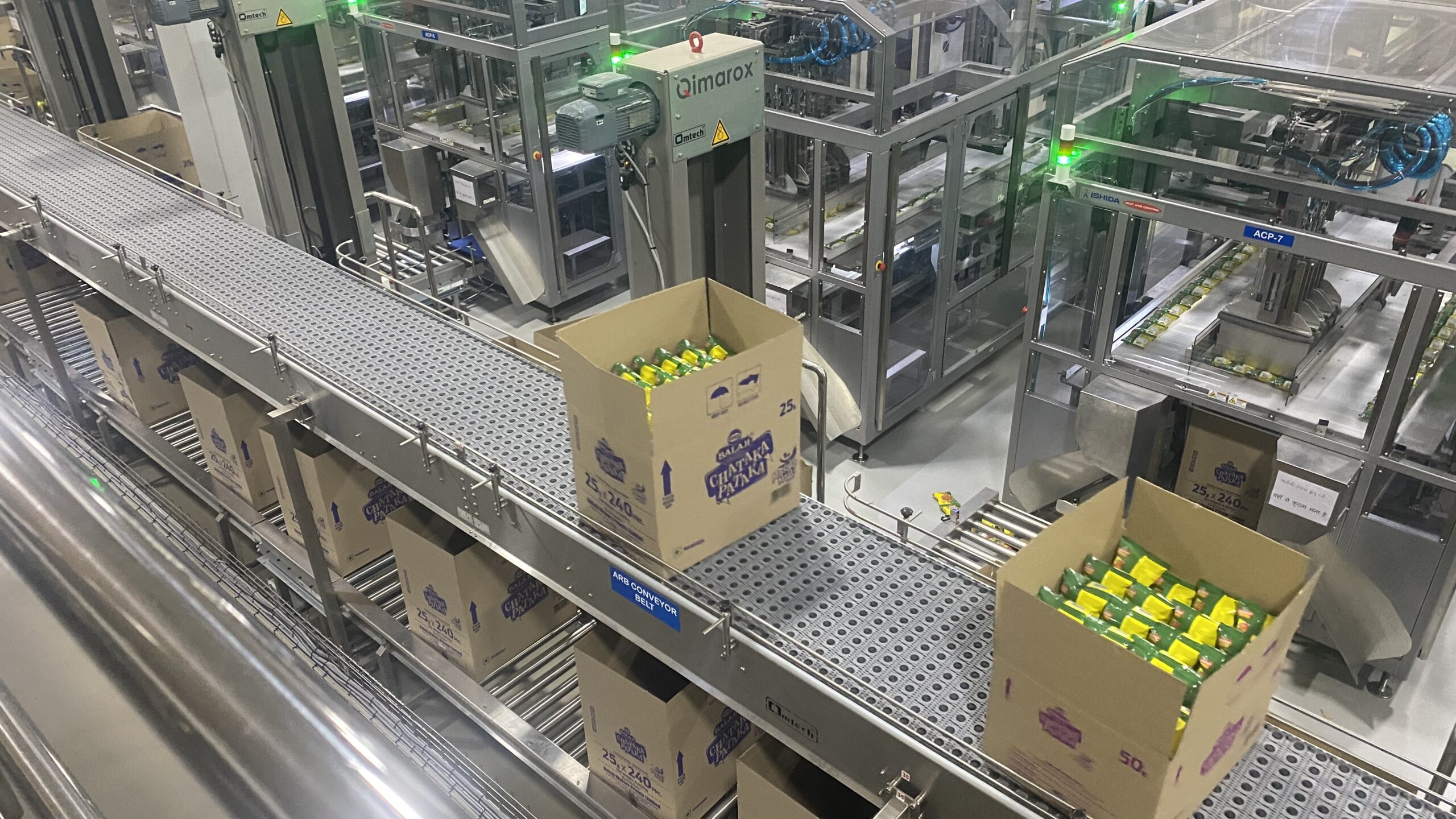
Balaji Wafers, one of India’s leading snack makers, had been packing cases by hand, moving them by trolley and palletising manually. As demand grew, they added automatic case packers and collaborative palletising robots at three plants. The question was how to move cases between that equipment in the space available.

Intralox provided line layout consulting and used Demo3D simulation software to compare different technologies within the existing footprints, which gave Balaji’s team confidence in the recommended design. Cases leaving the case packers are brought onto a shared line at high rates by an ARB™ Virtual Pocket Merge, and an ARB™ 90-Degree Transfer S400 then sorts them by SKU to the right robot for palletising. Intralox modular plastic belting connects the conveyors in between.

Scroll to Top